
As producers know, from the moment a director engages in the recruitment process for a production, through to the delivery of that production, their wellbeing should be considered.
But in the high-pressured world of production, where budgets are continually squeezed and timelines become ever tighter, how do we ensure that standards are upheld and best practice is always applied?
Consideration starts within the hiring process itself, where good communication is the key.
How do they (the director) play in a team? How do they work? What can I find out about them?
On-Boarding
Hiring for such a pivotal role is often challenging. Short turnaround times from a greenlight, complicated/conflicting schedules, or broadcaster interventions can all make it harder. Jessica Sharkey of Hat Trick Productions, the long-established indie behind Have I Got News for You and Derry Girls, stresses the simple but important matter of keeping directors and agents updated. If you are considering several directors, “giving a time frame for when they will get an answer, and if the time frame changes, updating them.”
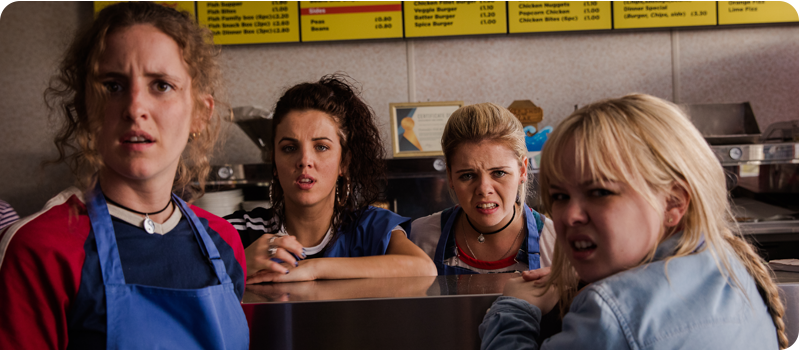
Derry Girls, produced by Hat Trick Productions
It will generally be one or two executive producers and/or the talent manager at the production company who will be managing the hiring process, which helps to make the channels of communication clear for both sides. Keeping the waiting period to get back to candidates - and to release pencils - as short as possible is also key to preventing unnecessary anxiety.
Good communication goes both ways. Producers note that sometimes agents will put a director up for a job only for the producer to discover they are unavailable for it. This impacts trust and can cause nervousness on the part of producers to update pencils and inform other candidates too soon.
‘Ghosting’ in the hiring process - the practice of going silent on someone and not responding to their calls or emails about a role they have applied and/or been interviewed for - is cited as an issue by some directors. Sharkey says “there's no excuse for anybody to do that.” She adds that she will often be liaising with agents as opposed to the directors themselves, which helps to remove any personal awkwardness from the process. An agent may also ask for feedback about why a director didn’t get the job. “Often it is simply, because (they) weren’t quite right for it or somebody with more relevant experience came along” says Sharkey. But it’s also important to be honest with the agent if it’s more than that, “so then the agent can decide how to feedback to their client.”
It can be more challenging for very small indies, though. At Belfast-based Walk On Air Films (WOA), co-producers of the multi-award winning factual series, Once Upon a Time in Northern Ireland, Co-Founder Rachel Hooper acknowledges that small companies can struggle under the sheer volume of emails: “We try really, really hard not to (ghost), but I can see how it happens… I don't think any of it is intentional. I think it's just the speed at which people are moving… what I always say to people is ‘please contact me and feel free to chase me’.”
She notes that larger companies, who can hire a talent manager, are potentially better able to manage the hiring process, but that doesn’t stop her from trying, and caring: “I'll wake up at two o'clock in the morning, go ‘I promised to meet that person, I haven't got back to them’. You know, you feel it.”
WOA also prioritises value alignment in their hiring process, to ensure that the director is not only the right fit for the project but the wider team and company culture, which will benefit everyone. “How do they play in a team? How do they work? What can I find out about them? So, we do a lot, we try really hard to dig into references… Because we know that some people have a particular style of work, and it's just not going to work with us.”
Making the right hire for the project and company is essential. But ensuring the process is handled correctly and that communication is clear and respectful to all candidates is the standard that producers should be aiming for, if they are not already meeting it.
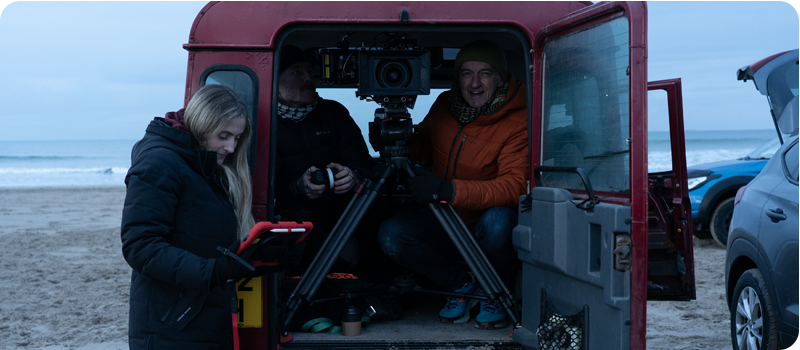
Behind the scenes on Death of a Show Jumper, produced by Walk On Air Films.
Off-Boarding
But what about off-boarding? The wrapping of a production is an opportunity for companies to receive feedback and identify areas for improvement in the way they work with directors going forward.
It's not framed as an exit interview, but it is a chance for them to talk about the experience.
Hooper says that creating a more formal exit interview process is something that WOA is actively looking to implement because “it’s really important.” They are working with an HR Advisor to do this as part of the Channel 4 Business Boost Scheme the company was selected for. Hooper says they already have informal chats with directors, and make sure they keep in touch about contributors and how a project is doing. “I will always make sure it's not like, ‘thanks very much, cheerio’.”
There’s an obvious friction in the process however, as freelance directors may be worried about sharing negative feedback for fear it may potentially impact their prospects of being re-hired in future. Hooper’s hope is that her company’s culture (and clear communication of it from the outset) helps to address that, “because we've created a safe culture, a trusting culture, that people would be able to be clear with us.”
Hat Trick has already tried to implement a more formal feedback process as part of its off-boarding in the form of an end-of-production questionnaire, shared with all crew members. “It'll ask about people's experiences, or what was positive, what was negative, what worked well, what didn't work well” says Sharkey. “The directors are sent those to fill in, and not once has a director ever filled it in.”
So informal channels have been more effective for them to date. “At the end of the job (we will) take a director out for lunch or for dinner and chat with them. It's not framed as an exit interview, but it is a chance for them to talk about the experience.”
Different approaches and levels of formality will work better for different companies, but good communication remains the key throughline to ensuring the process of on- and off-boarding on a production is respectful and fair to the directors involved.
Best Practice
Takeaways
This content came out of discussions at the Directors and Producers Forum, which consists of representatives from Pact, Directors UK, BBC Studios and ITV Studios. The Forum was established to try to facilitate open and honest dialogue to improve working practices between directors and producers in UK film and television production.
A follow-on article about director welfare during production is also available.
Pact would like to thank Jessica Sharkey, Rachel Hooper and Tim Sealey for their contributions to this article, and Directors UK and their members for their contributions.
Banner Image: Courtesy of Walk On Air Films, from filming on Death of a Showjumper.